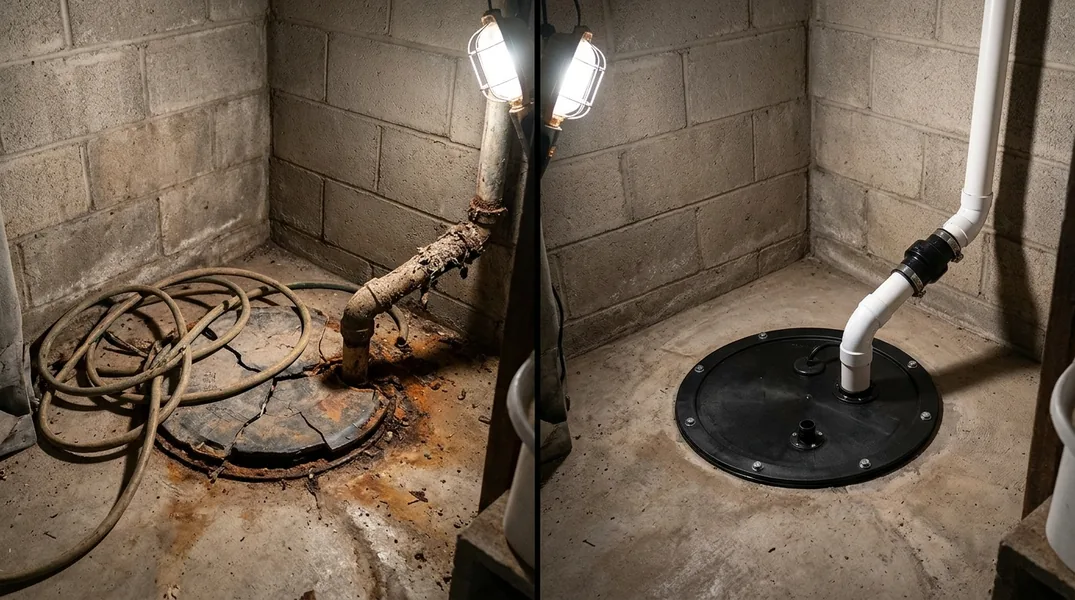
Why Sump Pump Maintenance Matters Before Storm Season in Concord
Spring and summer storms in the Piedmont can drop several inches of rain in a matter of hours, and the red clay soil around Concord does not absorb water quickly. When that water piles up against your foundation, it looks for the path of least resistance, which is often the drain tile that feeds your sump pump. If that pump has been sitting idle since last year, the first big storm is the worst possible time to discover it will not start.
Sump pump maintenance is not glamorous work, but it is one of the cheapest forms of insurance a homeowner can buy. A pump that is properly cleaned, tested, and backed up can move thousands of gallons of water away from your basement during a single storm. A pump that is clogged, undersized, or running on a dead battery will do nothing while water spreads across your floor. Taking an afternoon to check your system now is far easier than dealing with soaked drywall and ruined storage later.
The Sump Pump Check Valve: A Small Part That Prevents Big Problems
One of the most overlooked components in any sump system is the check valve, the small fitting on the discharge pipe that allows water to flow out but not back in. Without a working check valve, every time the pump shuts off, the water sitting in the vertical pipe drains back into the pit. The pump then restarts to move that same water again, cycling over and over and wearing out the motor far ahead of schedule.
During your pre-storm inspection, confirm the check valve is installed correctly and is not stuck open or clogged with debris. Listen to the pump as it runs: a healthy system should shut off cleanly without a gurgling sound of water falling back into the pit. If you hear that sound or notice the pump short-cycling, the valve likely needs to be replaced. It is an inexpensive part, and replacing it now protects the more expensive pump and keeps your Basement Waterproofing system working the way it was designed.
Battery Backup Sump Pump: Your Safety Net When the Power Fails
The heaviest storms in the Piedmont are also the ones most likely to knock out power, and that is exactly when your sump pump is needed most. A battery backup sump pump runs independently of the home's electrical supply, so it keeps moving water even when the lights are out. If your basement relies on a single electric pump with no backup, a multi-day outage during a rain event could leave you with standing water and thousands of dollars in damage.
Battery backup systems need their own maintenance. Test the backup by simulating a power failure or using the test button on the control unit, and confirm the battery holds a charge. Most backup batteries last three to five years, and a battery that has quietly aged out will not help you when the grid goes down. Check the terminals for corrosion, verify the alarm sounds when the battery is low, and replace the battery on schedule. Homeowners in Kannapolis and Harrisburg face the same storm patterns, so the same checklist applies across the region.
A Practical Pre-Storm Sump Pump Maintenance Checklist
Start by unplugging the pump and clearing debris from the pit, including silt, gravel, and anything that could jam the float switch. Pour a bucket of water into the pit to confirm the float rises freely and the pump kicks on and off at the right levels. While the pump is running, listen for grinding or rattling noises that suggest a worn bearing or something caught in the impeller. Check that the discharge line is clear and that the water is being routed well away from the foundation, not dumped back against the wall.
Next, inspect the pit itself for cracks or signs of water seeping in through the floor, which can point to a broader Foundation Waterproofing issue rather than a pump problem. If your system relies on an Interior Drain Tile System, make sure the weep holes and channels are open and not blocked by sediment. Finally, test the backup pump and alarm, and write the test date on the unit so you remember when it was last checked. If any step reveals a problem you are not comfortable diagnosing, call Concord Waterproofing at (980) 680-6560 for a professional inspection.
Storm Basement Flooding: When to Call a Sump Pump Pro Near Me
Some warning signs are best handled by a professional. If your pump runs constantly, trips the circuit breaker, or fails to keep up during heavy rain, the issue may be an undersized pump, a failing motor, or a drainage problem that no amount of cleaning will fix. Persistent dampness, efflorescence on the walls, or water pooling near the pit after storms can also indicate that surface water is not being managed properly around the home. In those cases, an Exterior Basement Waterproofing assessment may reveal that grading, downspouts, or foundation drainage need attention alongside the pump.
Storm basement flooding often has more than one cause, and a thorough inspection saves homeowners from guessing. A technician can verify pump capacity against the square footage and drainage load of your home, check the check valve and discharge line, test the battery backup under load, and confirm the pit is receiving water the way it should. If you want to know what repairs or upgrades would run, ask for pricing up front so there are no surprises. Concord Waterproofing serves homeowners throughout the area, including Mount Pleasant, and offers a free estimate to get started. Do not wait for the first storm to find out whether your pump is ready.
Looking for a professional basement waterproofing contractor in Concord? Concord Waterproofing responds fast for all your basement waterproofing needs.
Get a Free QuoteOur services: Basement Waterproofing · Interior Drain Tile System · Exterior Basement Waterproofing